Travelling With an Insulin Pump: 12 Things We Wish We’d Known Sooner
Elissa started Diabete-ezy more than 20 years ago. A mum of five children living with Type 1 diabetes, she began the business to make everyday life easier for families like hers. Today, Diabete-ezy is still a family business, and Elissa is still at the heart of it.
Travelling with an insulin pump gets easier with time, but there’s a lot we wish we’d known at the start. Fred (Elissa’s youngest) was diagnosed with Type 1 diabetes at just 2 years old. That meant that when he was old enough to start travelling overseas on his own, he had to figure a lot of things out. Here’s what he has learned, from flying with an insulin pump.
Everyone’s different, so please talk to your own diabetes team before you go.
1. Pack more than you think you need
Delays happen, things get lost and plans change. It’s much easier to bring home extra than to run out.
Tip: we use packing cubes to keep all of Fred’s supplies in one place, and a smaller pouch with his daily supplies in a backpack.
2. Keep important supplies in your hand luggage
Checked bags can get lost or delayed, so keep what you can’t do without with you. Make sure your sharps are in your own hand luggage, not your travel partner’s.
3. Split your supplies between bags
Not at the bottom of a bag. We keep ours in the pockets of the pump belt.
Tip: rules about liquids and gels differ between countries and airlines, and medical items are often treated differently. Check the current rules with your airline and the airports you’re flying through before you go.
5. Give yourself extra time
Queues, security and gate changes all take time, and we never rush through an airport.
6. Can you take an insulin pump through airport security?
Advice on scanners and x-ray machines varies by device, so check your pump manufacturer’s guidance before you fly. Tell the security officers you’re wearing an insulin pump as soon as you reach screening, and ask about alternative screening. Your pump may also be swabbed for explosives.
“On a recent trip to Jakarta, Indonesia, the security officers were a bit confused when I told them I couldn’t go through the x-ray. Insulin pumps aren’t common in Indonesia, and there was a language barrier. Luckily, Larisa could translate for them, but if we ever travelled to another country, we agreed we’d need to have a translated sentence handy.”
Fred
Tip: carry a translated sentence explaining your insulin pump, so you’re covered wherever you’re flying.
For more advice, see Diabetes Australia’s tips for travelling with an insulin pump, Diabetes Victoria’s airport travel guide and Diabetes WA’s guide to navigating airports.
7. Expect your routine to change
New time zones, different food and lots of walking can all change how your body behaves. Talk to your diabetes team about your plan before you go.
8. Think about heat and cold
Check what the manufacturer of each of your supplies says about temperatures. Also check that your accommodation has appropriate storage, such as a mini fridge in your hotel room for your insulin.
9. Carry your ID, and any letters you need
Rules differ between airlines, airports and countries, so check before you fly. If your diabetes team recommends a letter, bring it. We always bring 3 to 4 printed copies in case security needs to keep one. The NDSS travelling by air page has more on what to bring.
Tip: organise this well in advance. We usually start 3 to 4 months ahead, just in case we need to email the embassy to confirm.
10. Know important local contacts
It’s a quick thing to look up before you leave, and you’ll feel better knowing. Note down the emergency number and where the nearest pharmacy and the closest medical clinic are.
Tip: we keep this information on both of our phones and printed out, just in case.
11. How to carry your insulin pump and supplies when travelling
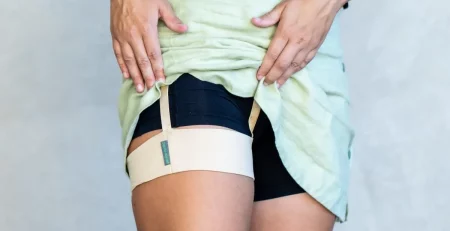
A pump belt keeps your insulin pump snug and hands-free, and the extra pockets can hold your lollies, ID, phone and a few small things.
Tip: keep all the supplies that may need to be checked in a separate pouch in your bag that’s easy to take out.
12. Bring a spare belt
You’ll always want a clean one ready, especially on a long trip.
It gets easier
The first trip can feel like a lot. After a few, it becomes part of the routine.
Having diabetes and taking these extra steps doesn’t mean travelling will be any less exciting or enjoyable. Your trip is what you make it! If you’re flying with others, be sure to tell them about any extra help you need from them.




 NL
 EN_AU
 ES
 DE
 FR
 PT
 SV
 ZH
 ID
 AR